Professional Headshot Examples: 30+ Styles by Industry (2026)
30+ professional headshot examples by industry, gender, and style. See what works for corporate, healthcare, legal, tech, and more, plus how to get yours.
The best professional headshot examples share five traits: controlled lighting, a genuine expression, a clean professional headshot background, solid-color clothing, and head-and-shoulders framing. People judge trustworthiness from a face in 100 milliseconds, and those snap judgments rarely change with more time. Your professional headshot has to get it right instantly. But "professional" doesn't mean one look. A healthcare provider's headshot and a tech founder's headshot serve the same purpose (building trust before a handshake) yet they look nothing alike.
This guide breaks down 30+ professional headshot examples across eight industries, multiple styles, and both genders. Every section includes what works, what doesn't, and why, so you can find the right style for your context, whether you're working with a photographer or using an AI headshot generator.
- Professional headshot examples share five traits: controlled lighting, genuine expression, clean background, solid-color clothing, head-and-shoulders framing
- Match your headshot to your industry: conservative for finance and law, warm for healthcare, personality-forward for creative fields
- A genuine smile boosts perceived likability by +1.35 and competence by +0.33 (PhotoFeeler, 60,000+ ratings)
- Modern headshots favor darker backgrounds, natural expressions, and minimal retouching over the rigid studio style of the 2010s
- AI headshot generators now produce results comparable to studio photography for digital use cases, starting at $9
In This Guide
- What Makes a Great Professional Headshot (5 Elements)
- Professional Headshot Examples by Industry
- Professional Headshot Examples for Women
- Professional Headshot Examples for Men
- Modern vs Traditional Headshots
- How to Choose the Right Background
- Good Headshots vs Bad Headshots
- How to Get Professional Headshots (3 Methods)
- Where to Use Your Headshot
- FAQ
What Makes a Great Professional Headshot
The difference between a headshot that builds trust and one that gets scrolled past comes down to five elements. Researchers at Princeton found that people form trustworthiness judgments from a face in just 100 milliseconds (Willis & Todorov, Psychological Science, 2006). PhotoFeeler's analysis of 60,000+ ratings quantified what makes those judgments positive.
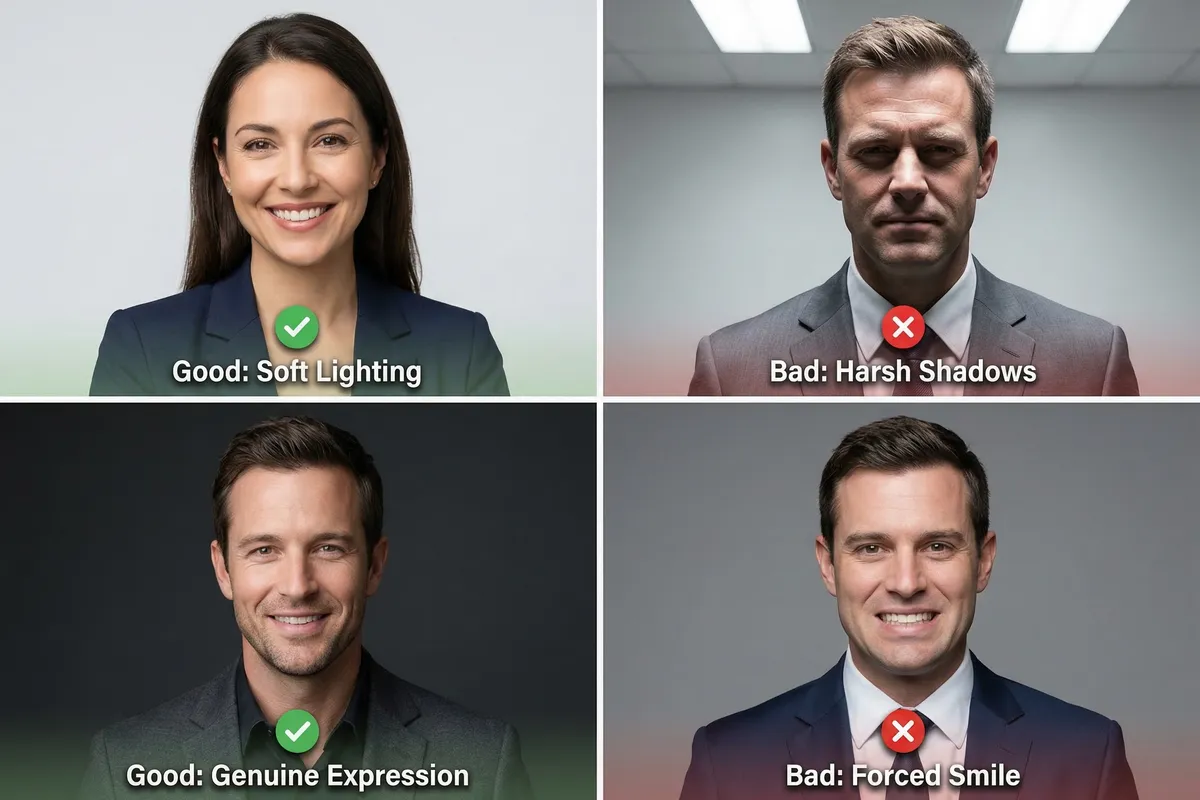
| Element | What Works | What Doesn't | Impact |
|---|---|---|---|
| Expression | Genuine, relaxed, eyes engaged | Forced smile, tense jaw, dead eyes | Teeth-showing smile: +1.35 likability |
| Lighting | Soft, directional, even across face | Harsh overhead, raccoon shadows | Defined jawline shadow: +0.24 competence |
| Framing | Head and shoulders, slight body angle | Full body, extreme close-up | Full-body framing: -0.29 competence |
| Background | Clean, non-distracting, consistent | Cluttered room, cropped-out people | 94% of first impressions are design-related |
| Clothing | Solid colors, one level above daily norm | Busy patterns, logos, wrinkled shirts | Formal dress: +0.94 competence, +1.29 influence |
Good lighting eliminates harsh shadows and highlights facial features naturally. A genuine expression reads as confident and approachable, not forced. Head-and-shoulders framing keeps the focus on your face while leaving room for platform crops like LinkedIn's circular frame. A clean professional headshot background makes you the focal point, not your surroundings. Solid neutral clothing directs attention where it belongs.
These five elements apply to every professional headshot, regardless of industry or style. What changes is how you calibrate each one. The headshot examples below show how that calibration plays out across different professions and contexts.
Professional Headshot Examples by Industry
Every industry has unwritten rules about what a headshot should communicate. The wardrobe, expression, background, and overall energy shift based on who is looking at your photo and what they need to believe about you.

Corporate and Executive
Corporate headshot examples are the standard: clean background, structured attire, direct eye contact. They appear on company websites, annual reports, board presentations, and press releases. The goal is gravity and trust without coldness.
What defines the corporate look: minimal accessories (the face is the focal point), direct eye contact with a composed expression, and structured clothing: blazers, suits, dress shirts. Research shows that darker-valued clothing receives higher trust ratings than lighter values of the same style. Dark neutral backgrounds (navy, charcoal, near-black) are the fastest-growing trend in corporate photography.
For C-suite and partner-level executives, the headshot carries extra weight. It shows up in investor presentations, conference bios, and press features. Executive portraits tend to use slightly tighter framing, more deliberate lighting, and a composed expression that signals authority without arrogance.
Best for: Company websites, board presentations, press releases, investor decks.
Healthcare
Healthcare headshot examples serve a specific function: build patient trust before the first appointment. A study published in Physicians Weekly found that 52% of consumers would choose a physician with a four-star rating and a photo over a five-star physician without one. The preference is strongest among parents (59%) and millennials (58%).
What works: clean, light backgrounds (white, soft blue, teal) that feel clinical without being cold. A warm, approachable expression with a genuine smile. Patients need to feel comfortable before they walk in. White coats are preferred by 69.9% of patients in professional directory photos.
Best for: Provider directories, hospital websites, patient-facing materials.
Legal and Law Firm
Only 22% of U.S. survey respondents find lawyers trustworthy. That makes the headshot one of the few chances an attorney has to shift perception before a consultation.
What works: dark, structured suits in navy or charcoal. Squared shoulders for authority with a slight body angle for dimension. Neutral to dark backgrounds. A serious or restrained expression. A subtle closed-mouth smile works for family law and personal injury; corporate litigation often skips the smile entirely.
Best for: Law firm websites, partner directories, client-facing pitch materials.
Finance and Consulting
Finance and consulting headshot examples split between two needs: authority for senior partners and approachability for client-facing advisors. The wardrobe stays conservative (this isn't the industry for fashion risks), but the expression and background can shift.
What works: blue backgrounds are the industry standard. Blue signals trust, calm, and dependability. Formal attire: suits, blazers, dress shirts. Direct eye contact with a confident expression. For financial advisors, a warmer smile builds rapport. For investment banking, composed neutrality signals competence.
Best for: Financial advisor profiles, consulting firm websites, client-facing directories.

Technology and Startups
Tech has moved past hoodies but hasn't swung to suits. The rule: dress one level above your daily norm. Cashmere sweaters and layered looks are the current sweet spot for tech headshot examples.
What works: business casual. Clean crew necks, fitted button-downs, optional blazer. Lighter, cleaner backgrounds (white, soft gray, subtle gradients). Open, genuine smile. Relaxed professional headshot poses with a slight body angle, less rigid than corporate, more polished than casual.
Best for: Company team pages, conference bios, startup pitch materials.
Real Estate
Real estate agents live and die by personal brand. Agents who use professional photography make double the average gross commission income compared to those who don't.
What works: warm, genuine smile, big enough to feel welcoming, not so big it looks forced. Business casual: blazer with soft blouse or open-collar shirt. Warmer background tones or lifestyle settings. Colors that project approachability: warm blues, soft teals, neutral backgrounds. The headshot needs to say "you can trust me with the biggest purchase of your life."
Best for: Property listings, business cards, brokerage websites.
Creative and Marketing
Creative professionals get more room to play. Agency leaders, designers, writers, and marketing executives can push into bolder territory: textured clothing, statement colors, expressive backgrounds. The headshot itself becomes a portfolio piece.
What works: bold background colors (teal, warm orange, deep red). Expressive clothing with statement pieces and jewel tones. Personality-forward expressions with wider smiles and visible energy. Can push into three-quarter framing or environmental elements.
Best for: Agency profiles, personal branding, social media, portfolio sites.
Education and Academic
Education headshot examples need warmth above all. Whether for a school staff directory, university faculty page, or conference presentation, the viewer is a student, parent, or colleague who needs to feel comfortable.
What works: soft, warm backgrounds (gray, light blue, warm tones). Business casual to smart casual: soft knit sweaters, approachable layering. Genuine, warm smile. Natural lighting preferred. Overly corporate reads as cold in an academic setting.
Best for: School directories, university faculty pages, conference speaker bios.

Professional Headshot Examples for Women
Women's professional headshot examples follow the same five fundamentals, but wardrobe, makeup, and posing have specific considerations that affect how the photo reads.

Wardrobe: Solid colors work best. Navy, charcoal, jewel tones (emerald, deep burgundy, sapphire) project competence without competing with your face. Avoid sleeveless tops in formal industries. Long sleeves photograph cleaner. V-necks and scoop necklines create a flattering frame for the face. Statement jewelry is fine for creative fields; keep it minimal for corporate and finance.
Makeup: Match your daily look. If you wear makeup every day, wear it for the headshot. If you don't, don't start now. The goal is recognition: the person in the headshot should match the person on the Zoom call. Over-retouched skin reads as fake in 2026. Natural texture is the standard.
Posing: A slight body angle (15-30 degrees) from the camera creates dimension without looking staged. Chin slightly forward and down to define the jawline. Direct eye contact reads as confident; looking slightly off-camera reads as editorial. For a deeper dive, see our guide on professional headshot tips.
Expression: For most industries, a genuine smile with eyes engaged is the strongest choice. A micro-expression (a slight smile with soft eyes) works for law, finance, and executive contexts where warmth needs to be balanced with authority.
Professional Headshot Examples for Men
Men's professional headshot examples tend to follow more conservative patterns, but the same five elements apply. The biggest mistakes: over-aggressive expressions, outdated grooming, and ill-fitting clothing.

Wardrobe: A well-fitted blazer or suit jacket is the safest choice across industries. Navy, charcoal, and dark gray are universally flattering. Ties are optional and industry-dependent: keep them for finance and law, skip them for tech and creative. Avoid wrinkled shirts, oversized collars, and bright patterns. The fit matters more than the brand.
Grooming: Clean, current, and consistent with your daily appearance. A fresh haircut 3-5 days before the shoot looks most natural. Facial hair is fine if well-maintained. Consider a matte moisturizer to reduce shine under studio lighting. It's invisible on camera but makes a visible difference in the final image.
Posing: Squared shoulders facing the camera project authority. A slight body angle (15-30 degrees) adds dimension and feels more natural than facing head-on. One hand in the pocket is a classic men's headshot pose that reads as relaxed and confident. Keep the chin neutral: not too high (reads as arrogant), not too low (reads as uncertain).
Expression: A slight, genuine smile with direct eye contact is the default recommendation. A closed-mouth smile with relaxed jaw works for industries where warmth needs to be tempered with seriousness. The "squinch" technique (a slight narrowing of the lower eyelids) projects confidence without hostility.
Modern vs Traditional Headshots
Professional headshot styles have shifted dramatically since the 2010s. Modern headshot examples favor authenticity over perfection: darker backgrounds, minimal retouching, and relaxed genuine expressions are replacing the rigid studio portraits of the previous era.
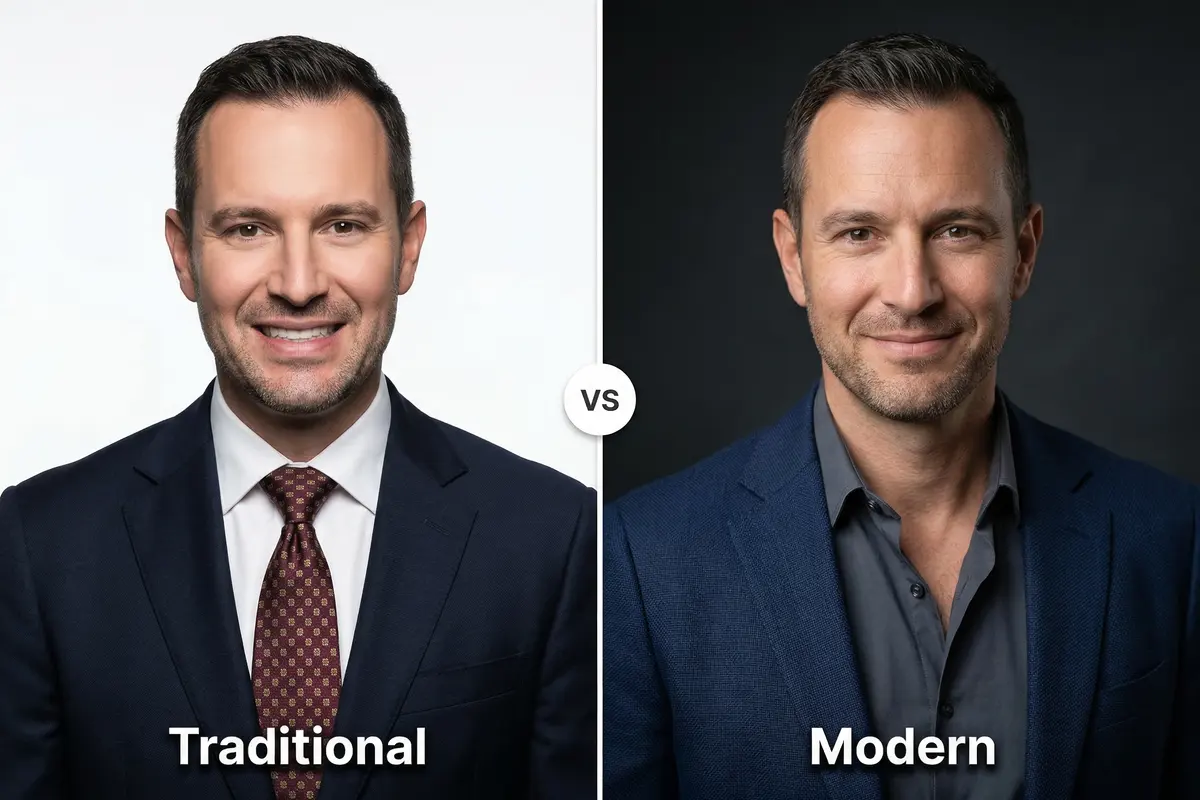
| Element | Traditional (Pre-2020) | Modern (2024-2026) |
|---|---|---|
| Expression | Rigid smile, tense posture | Relaxed, genuine micro-expressions |
| Lighting | Harsh three-point studio setup | Soft, natural, or diffused studio light |
| Background | Bright white or mottled canvas | Dark neutrals, subtle gradients, brand-matched |
| Attire | Full suit and tie mandatory | Industry-appropriate; business casual accepted |
| Retouching | Heavy skin smoothing, "airbrushed" | Light touch: remove distractions, preserve texture |
| Framing | Head-and-shoulders only | Head-and-shoulders standard; three-quarter for marketing |
The biggest shift is authenticity over perfection. Companies want headshots that look like the actual person in the room, not an over-retouched version. Heavy airbrushing and forced "cheese" smiles are out. Natural skin texture, relaxed body language, and genuine expressions are in.
Dark neutral backgrounds (charcoal, near-black, navy) are replacing bright white as the corporate default. They project sophistication and contemporary professionalism while making the subject pop visually. For team pages, brand-matched backgrounds maintain visual consistency while reinforcing company identity.
How to Choose the Right Headshot Background
The background sets the emotional tone of the entire image. The wrong choice can undermine an otherwise great headshot. Here's how headshot backgrounds break down by industry and context.
| Background | Best For | Mood | Industries |
|---|---|---|---|
| White / Light Gray | Provider directories, corporate standard | Clean, neutral, timeless | Healthcare, government, enterprise |
| Medium Gray | All-purpose professional use | Sophisticated, balanced | All industries |
| Navy / Dark Blue | Authority and trust | Trustworthy, stable, commanding | Finance, law, consulting, C-suite |
| Charcoal / Near-Black | Modern corporate, editorial | Dramatic, premium, distinctive | Tech, creative, executive portraits |
| Teal / Brand Colors | Brand identity, website consistency | Distinctive, on-brand, memorable | Tech, startups, creative, marketing |
| Environmental | Lifestyle branding, social media | Authentic, approachable | Real estate, non-profit, education |
For a deeper dive into background selection with side-by-side comparisons, see our full professional headshot background guide.
The most important rule: the background should complement you, never compete with you. A busy, colorful background pulls attention away from your face. A clean, intentional background keeps the viewer focused on the one thing that matters: your expression.
Good Headshots vs Bad Headshots: Common Mistakes
Knowing what makes a good headshot is half the battle. Knowing what makes a bad one (and why) helps you avoid expensive reshoots and missed first impressions.
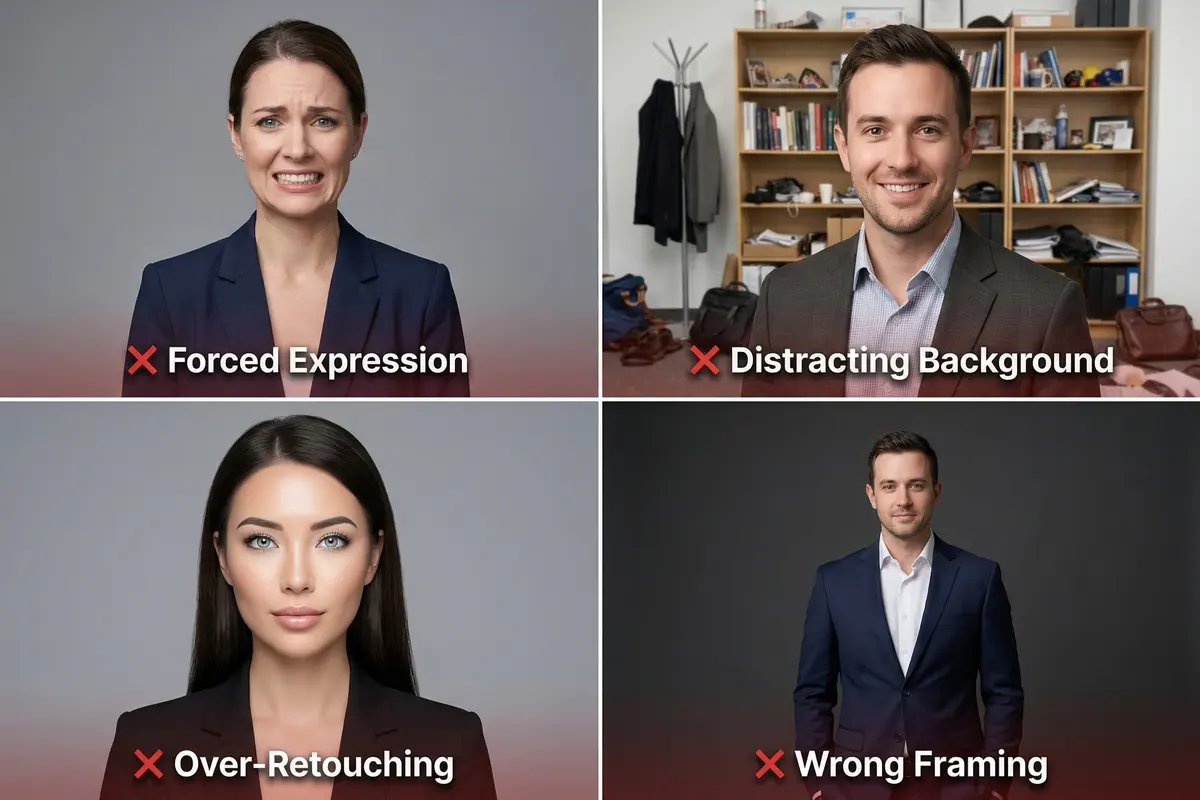
Mistake #1: Forced or uncomfortable expression. If your smile doesn't reach your eyes, it reads as fake. Casting directors, recruiters, and clients can tell instantly. They see thousands of headshots. A neutral expression with relaxed eyes is better than a strained grin.
Mistake #2: Distracting background. Cluttered rooms, cropped-out people, bright patterned walls. All of these pull attention from your face. Even a slightly busy background signals to the viewer that the photo wasn't taken seriously.
Mistake #3: Over-retouching. Heavy skin smoothing, digitally slimmed faces, and overly bright eyes make headshots look artificial. The person who shows up to a Zoom call or meeting should match the person in the headshot. If they don't, trust erodes instantly.
Mistake #4: Wrong framing. A headshot taken from too far away loses the intimacy that makes the format work. A headshot cropped too tight feels claustrophobic. The sweet spot is head-and-shoulders with your head near the top of the frame and space below the shoulders.
Mistake #5: Outdated photo. A headshot should reflect how you look today. If your hairstyle, glasses, or weight have changed noticeably, the headshot needs updating. Using a photo from five years ago creates a disconnect the moment someone meets you in person.
How to Get Professional Headshot Photos
Three methods, each with different trade-offs. The best choice depends on your use case, budget, and timeline.
| DIY | Photographer | AI (ManyPics) | |
|---|---|---|---|
| Cost | $0 (existing gear) | $150–400+ per session | Starting at $9 |
| Time | 1–2 hours | Half a day (booking + session + delivery) | Under 1 minute |
| Quality | Variable (depends on skill) | Premium (editorial, branding) | Professional for digital use cases |
| Best for | Quick updates, tight budget | Editorial campaigns, advertising | LinkedIn, company websites, email signatures |
| Requires | Setup, patience, photo skills | Budget and planning | A single photo |
DIY works when you have decent natural light, a clean background, and someone to hold the camera (use the rear camera, not the selfie camera). It's free but requires patience and practice to get professional results.
A traditional photographer delivers the highest quality for printed materials, editorial campaigns, and high-stakes branding. Expect to invest $150–400+ per session and half a day for booking, shooting, and delivery. The investment pays off when the headshot will be used at large scale or in physical media.
An AI headshot generator like ManyPics produces studio-quality results for digital professional contexts: LinkedIn profiles, company team pages, email signatures, speaker bios. Upload a single photo, choose a style, and receive polished professional headshot photos in under 1 minute. Your first headshot is free. Try our free ai headshot generator to see the quality for yourself.
Whichever method you choose, the fundamentals from the headshot examples in this guide still apply: good lighting, genuine expression, solid-color clothing, and a clean background.
Where to Use Your Professional Headshot
The average professional now has seven or more places where a headshot appears. Getting all of them consistent from a single session saves you from hunting down different photos for different platforms.
- LinkedIn profile. Profiles with professional photos receive 21x more views and 36x more messages. It's the single highest-impact use of a headshot.
- Company website and About page. Often the second or third most-visited page on a corporate site. Consistent team photos signal a cohesive, professional organization.
- Email signature. Puts a face to every message you send. A small but consistent professional presence across hundreds of daily touchpoints.
- Speaker bios and conference materials. Event organizers need high-resolution headshots, often on short notice. Having one ready eliminates last-minute scrambles.
- Provider directories. 52% of patients choose a doctor with a photo over a higher-rated one without. For healthcare professionals, the headshot directly impacts patient acquisition.
- Proposals and client-facing materials. Adding a headshot to proposals and pitch decks increases perceived trust. People do business with people, not logos.
- Slack, Teams, and internal tools. Builds connection in remote and hybrid teams where colleagues may never meet face-to-face.
If you need professional headshot photos across multiple platforms, consider getting 2-3 styles from the same session, or use an AI headshot generator that lets you generate multiple looks from the same set of photos. Consistency matters: the same person should be recognizable across every platform.
Frequently Asked Questions
What is a good example of a professional headshot?
A good professional headshot is a head-and-shoulders photo with soft, directional lighting, a genuine expression, a clean background, and clothing one level above your daily norm. The subject's eyes should be sharp and engaged. PhotoFeeler's analysis of 60,000+ ratings found that formal dress adds +0.94 perceived competence and a genuine smile adds +1.35 likability.
What should I wear for a professional headshot?
Wear solid colors one level above your daily attire. Navy, charcoal, and jewel tones project trust and competence. Avoid busy patterns, large logos, and shiny fabrics. Match formality to your industry: suits for finance and law, business casual for tech, bolder pieces for creative roles.
How much do professional headshots cost?
Professional headshots range from free (DIY) to $400+ for a traditional studio session. AI headshot generators like ManyPics start at $9 and deliver results in under 1 minute. Studio photographers excel at editorial work, while AI handles LinkedIn, company websites, and digital profiles. The right choice depends on how the photos will be used.
Should I smile in a professional headshot?
For most industries, yes. PhotoFeeler's data shows a teeth-showing smile boosts likability by +1.35, competence by +0.33, and influence by +0.22. The exception: legal, finance, and executive contexts where a composed neutral projects more authority. The key is a genuine smile. Forced smiles with clenched jaws read as uncomfortable and undermine trust.
Can I use an AI-generated headshot professionally?
Yes. AI headshot generators produce studio-quality results suitable for LinkedIn, company websites, email signatures, and digital profiles. Upload a single photo, choose a style, and receive polished headshots in under 1 minute. For editorial campaigns or printed materials, a traditional photographer is the better choice.
What background works best for professional headshots?
It depends on your industry. White or light gray works for healthcare and corporate directories. Navy and dark blue signal trust for finance and law. Charcoal and dark neutrals are trending for modern corporate headshots. Teal and brand colors work well for tech and creative fields. See our full professional headshot background guide for side-by-side comparisons.





Get your AI headshot