10 Professional Headshot Poses That Actually Work (2026)
Master 10 professional headshot poses with expert tips on chin, shoulders, and expression. Includes poses by industry (tech, finance, creative, healthcare).
Your professional headshot poses determine whether you look confident and approachable, or stiff and forgettable. A small shift in body angle or chin position can completely change how people perceive you. Knowing how to take a professional headshot for LinkedIn, company websites, or business cards starts with your pose. The right pose is not about modeling experience. It is about knowing a few proven techniques that work for any body type and any industry.
This guide covers 10 professional headshot poses that work across corporate, creative, and client-facing contexts, plus technical posing tips for chin, shoulders, and expression that make every shot look natural. Whether you are preparing for professional headshots with a photographer or taking a selfie for LinkedIn, these poses deliver.
- The three-quarter turn (body at 30–45 degrees) is the most flattering headshot pose for most people
- Push your chin forward and slightly down to sharpen your jawline on camera
- Drop your shoulders before every shot. Tension is the most common posing mistake
- Match your pose to your industry: open and warm for healthcare, composed for finance, creative for marketing
- A genuine expression matters more than a perfect pose. Let it reach your eyes
In This Guide
- Why Your Pose Matters
- 10 Poses That Work
- Chin, Shoulders, and Expression
- Poses by Industry
- Dos and Don'ts
- Practice at Home
- FAQ
Why Your Pose Matters
First impressions from a face form in under a second. Your professional headshot is often the first thing a recruiter, client, or colleague sees, before they read your title, your experience, or your bio. What they register instantly is body language: are you confident or tense? Approachable or closed off? Competent or unsure?
The difference between a headshot that builds trust and one that gets scrolled past usually comes down to three things: body angle, chin position, and expression. You do not need to be photogenic. You need to know which adjustments actually matter.

10 Professional Headshot Poses That Work
These are the best poses for headshots across every professional context. Each pose includes when to use it, who it works best for, and the one thing to watch for.
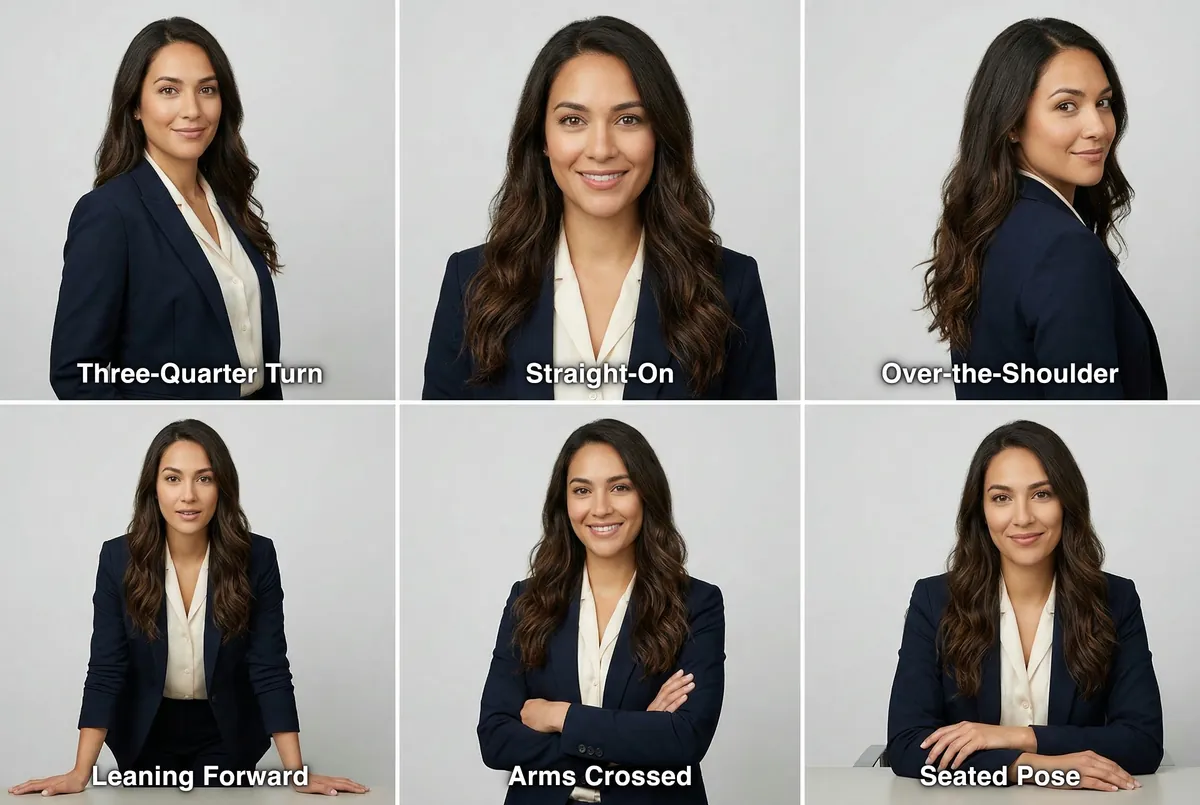
1. Classic Three-Quarter Turn
Turn your body 30–45 degrees from the camera while keeping your face toward the lens. This is the gold standard of professional headshot poses. It slims the frame, adds depth, and creates a dynamic shape that a straight-on shot cannot match.
Best for: LinkedIn profiles, corporate directories, team pages. Watch for: Keep your weight on your back foot for a natural, grounded stance.
2. Straight-On Front-Facing
Face the camera directly with squared shoulders and chin level. This pose projects authority and directness. It works when you want to convey power and stability (think executive team pages and leadership bios).
Best for: C-suite executives, attorneys, senior leaders. Watch for: Relax your jaw and soften your eyes. Without those, a straight-on pose looks like a mugshot.
3. Over-the-Shoulder Look
Turn your body away from the camera and look back over one shoulder. This adds movement and personality to the shot. It reads as curious, approachable, and slightly creative.
Best for: Thought leaders, authors, creative professionals, personal branding. Watch for: Keep the rotation subtle. Over-rotating makes the pose feel strained instead of natural.
4. Leaning Forward
Lean slightly toward the camera from the waist. Just a few degrees. This subtle shift makes you appear engaged and attentive, as if you are listening to someone across a table.
Best for: Consultants, coaches, therapists, client-facing roles. Watch for: Keep the lean minimal. Too much forward motion looks off-balance on camera.
5. Arms Crossed
Cross your arms with a relaxed posture and a slight smile. This pose signals confidence and authority without aggression. Keep your hands open and visible. No clenched fists.
Best for: Executives, speakers, team leaders. Watch for: Pair with a warm expression. Without it, crossed arms reads as defensive.
6. Seated or Desk Pose
Sit naturally at a desk or table with your forearms resting on the surface and a slight forward lean. This reads as grounded and accessible. It works well in environmental settings where you want to look relaxed but professional.
Best for: Consultants, financial advisors, anyone who meets with clients. Watch for: Sit up straight. Slouching on camera is more visible than you think.
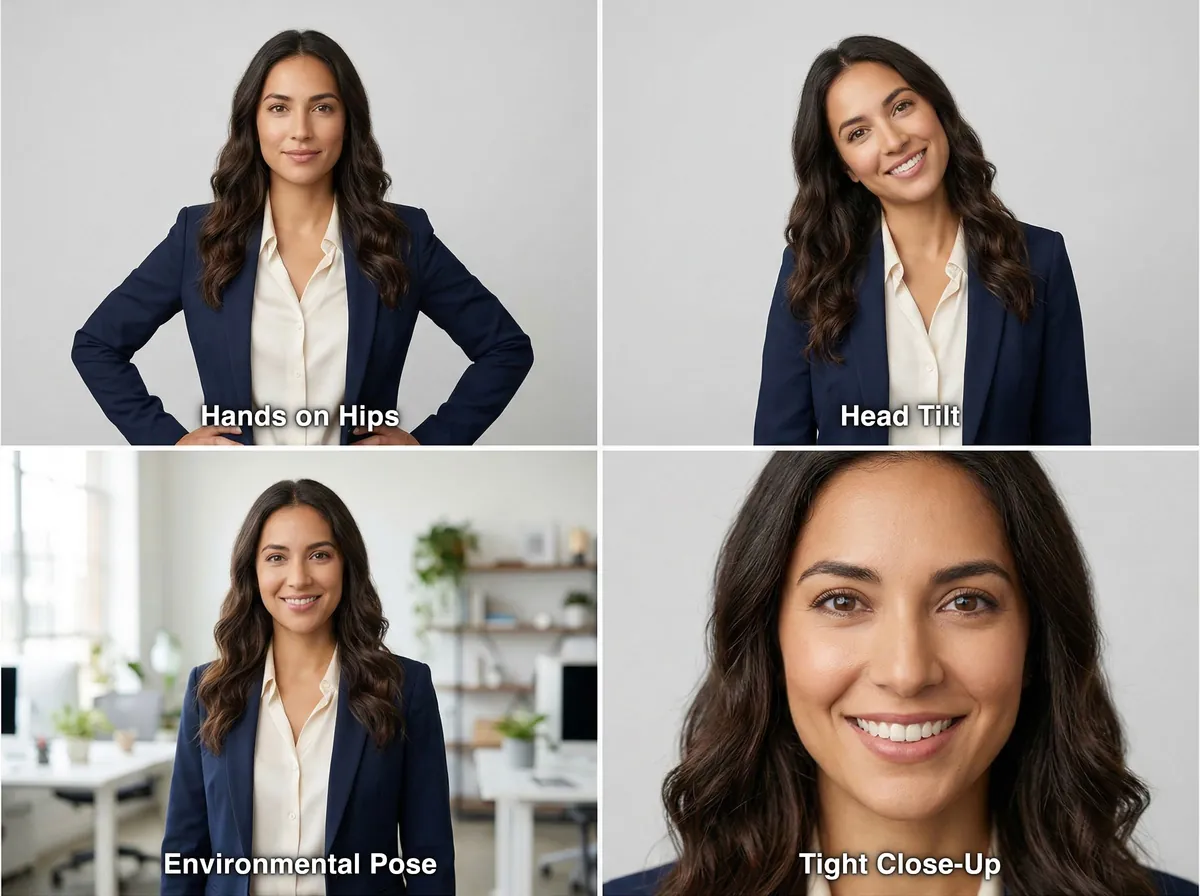
7. Hands on Hips
Place your hands on your hips with a neutral or slightly smiling expression. This stance reads as confident and ready for action. It is popular for entrepreneurial and creative profiles.
Best for: Entrepreneurs, creative directors, real estate professionals. Watch for: Keep your expression friendly. Hands on hips with a serious face can look confrontational.
8. Head Tilt
Tilt your head 5–10 degrees to one side. Tilting toward your higher shoulder reads as warm and friendly. Tilting toward your lower shoulder projects confidence.
Best for: Adding personality to any standard pose. Works well combined with the three-quarter turn. Watch for: Stay under 10 degrees. Anything beyond looks unnatural.
9. Environmental Pose
Step into your workspace, office, or an outdoor setting and pose within the environment. Stand or sit naturally. The setting tells a story about who you are and what you do.
Best for: Entrepreneurs, real estate agents, architects, creatives who want context. Watch for: The background should complement you, not compete with you. Keep it clean and relevant.
10. Tight Close-Up
Fill the frame with your face. This works when your expression is strong and genuine. Every detail matters: clean grooming, engaged eyes, and subtle warmth in the mouth.
Best for: Speaker bios, author pages, profile pictures that need to stand out at small sizes. Watch for: This crop magnifies every expression. A forced smile is obvious at this distance.
Chin, Shoulders, and Expression
Getting the right headshot pose is only half the equation. These three technical adjustments make any pose look polished.
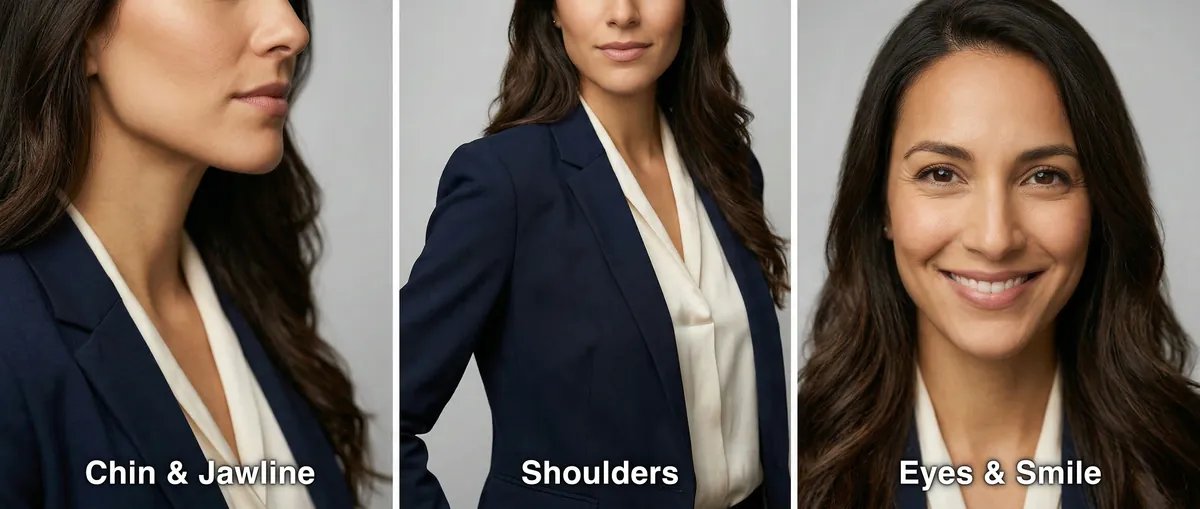
Chin and Jawline
Push your chin forward about an inch toward the camera, then tilt it down very slightly. Photographers call this "turtling." It feels strange, but on camera it sharpens your jawline and creates separation between your face and neck. The camera flattens three dimensions into two. Without this adjustment, gravity softens the jawline in ways you do not notice in real life.
The mistake: tilting your chin up. Looking down the camera from above reads as arrogant or disconnected.
Shoulders
Drop your shoulders before every shot. Then drop them again. They are still up. Tension in the shoulders is the single most common posing problem, and the camera amplifies it. Raised shoulders make you look anxious. Dropped shoulders make you look relaxed, confident, and open.
Roll your shoulders back once, let them settle, and keep them there. Your photographer (or your mirror) will need to remind you multiple times. That is normal.
Eyes and Smile
Look directly at the lens. Not at the photographer, not at a spot on the wall. Direct eye contact through the lens creates the feeling of a genuine human connection when someone later views the photo.
For your expression, match it to your audience. A closed-mouth smile with soft eyes works for most professional contexts. A full smile with teeth adds warmth for client-facing and people-oriented roles. A neutral expression with engaged eyes works for finance, law, and executive settings.
The critical rule: your smile must reach your eyes. A mouth that smiles while the eyes stay flat looks forced, and everyone can tell.
3 adjustments that make any pose work:
Best Headshot Poses by Industry
Different industries have different expectations. Here is how to match your headshot pose to your professional context. For more visual inspiration, browse our gallery of professional headshot examples.
Technology
The three-quarter turn with a relaxed, approachable expression. Tech values authenticity over formality. Avoid stiff, overly corporate poses. Environmental shots in modern workspaces can reinforce innovation without looking staged. A genuine smile reads better than a power pose in this space.
Finance and Law
Straight-on or three-quarter turn with a composed, confident expression. Trust and stability matter here. A neutral expression with soft eyes, no wide grins. Arms crossed can work for senior partners. Stick to clean backgrounds in professional settings. Keep it polished and conservative.
Creative and Marketing
More freedom to experiment. Over-the-shoulder, environmental poses, and candid-style framing all work. Use settings that reflect your creative work. The goal is to stand out while still appearing intentional and professional. Head tilts and wider smiles add personality that fits the field.
Healthcare
Warmth, trust, and competence. The three-quarter turn or leaning-forward pose works well. A genuine smile is important because patients want to feel they can connect with you. Clean, clinical backgrounds are preferred, but avoid looking sterile. Approachability is the priority.
| Industry | Recommended Pose | Expression | Background |
|---|---|---|---|
| Technology | Three-quarter turn | Relaxed, genuine | Modern workspace |
| Finance / Law | Straight-on or three-quarter | Composed, confident | Professional, clean |
| Creative | Over-the-shoulder, environmental | Expressive, personal | Reflects your work |
| Healthcare | Three-quarter, leaning forward | Warm, approachable | Clean, professional |

Dos and Don'ts
Do
- Angle your body 30–45 degrees from the camera
- Push your chin forward and slightly down
- Drop and relax your shoulders before each shot
- Maintain soft, direct eye contact with the lens
- Wear solid, neutral colors that flatter your skin tone
- Practice your expression in a mirror before shooting
- Choose a clean, relevant professional headshot background
Don't
- Stand flat-on and square to the camera
- Tilt your head more than 10 degrees
- Slouch or hunch your shoulders forward
- Use a forced or held-too-long smile
- Wear busy patterns, large logos, or shiny fabrics
- Lean your chin up (reads as arrogant on camera)
- Over-edit or heavily filter the final image
How to Practice Your Pose
You do not need a photographer or a studio to nail your headshot pose. A bathroom mirror and your phone camera are enough.
Mirror practice. Stand in front of a mirror and try the three-quarter turn. Angle your body, bring your face back to the mirror, and adjust your chin. Notice which side feels more natural and which angle flatters your jawline. Spend 2 minutes and you will see a clear difference.
Phone test. Set a 3-second timer on your phone, prop it at eye level, and take 10 shots trying different poses from this guide. Review them honestly. You will quickly see which poses suit your face shape and body type.
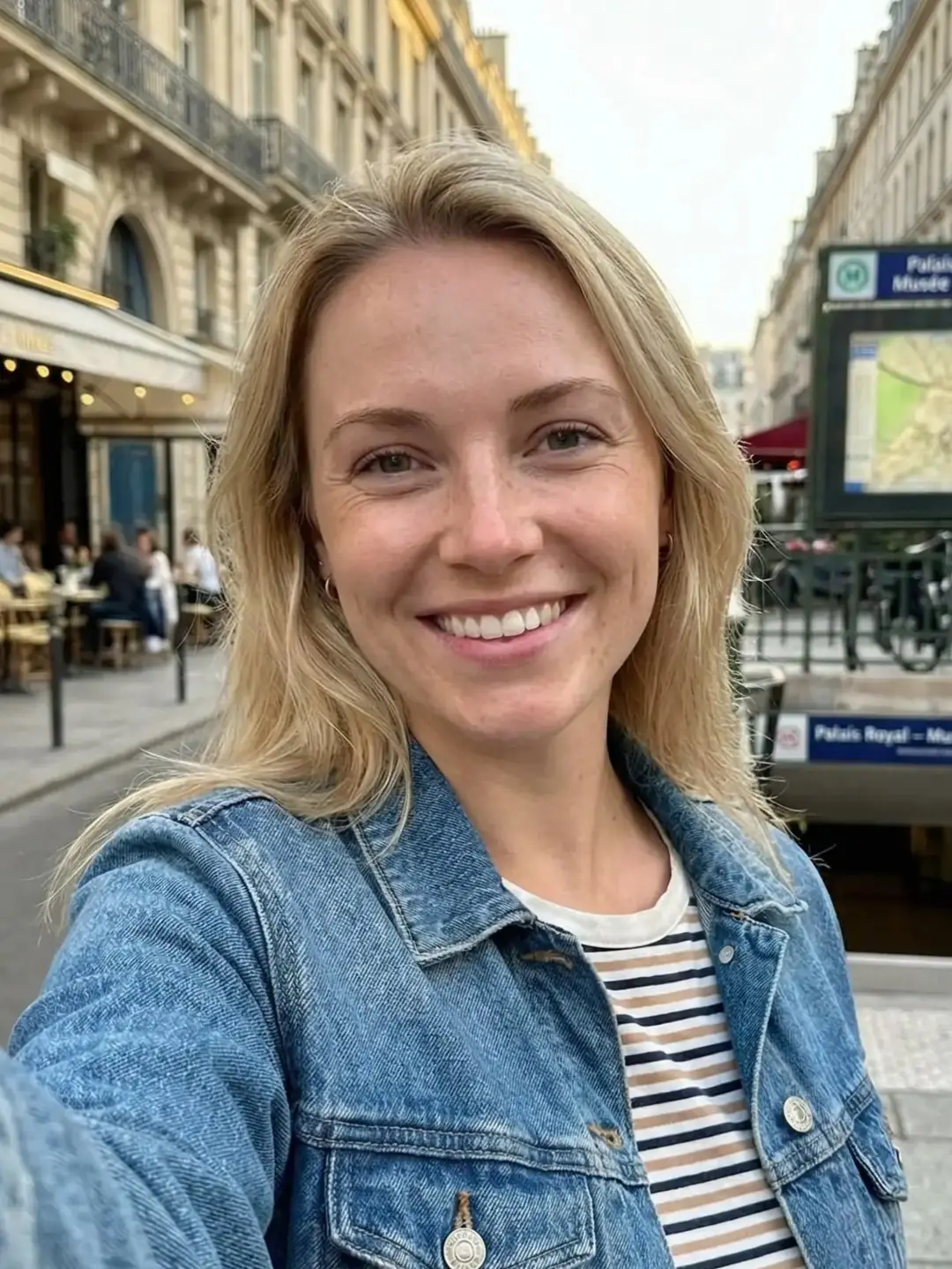
AI headshots. If you want polished professional headshots without a full shoot, upload a single photo to an AI headshot generator. These headshot posing tips apply to selfies too: angle your body, push your chin forward, and relax your shoulders before each shot. A free AI headshot generator like ManyPics takes your casual photo and produces studio-quality results in under 1 minute. No booking, no waiting, starting at $9.
Frequently Asked Questions
What is the best pose for a professional headshot?
The three-quarter turn (body angled 30–45 degrees from the camera with your face toward the lens) is the most universally flattering pose. It slims the frame, adds depth, and projects both confidence and approachability. It works for LinkedIn, company websites, and corporate directories.
How should I pose for a headshot if I'm not photogenic?
Almost nobody feels photogenic on command. Three things help immediately: angle your body instead of facing the camera straight-on, push your chin forward and slightly down to define your jawline, and drop your shoulders. These small adjustments make everyone look more relaxed and confident on camera.
Should I smile in a professional headshot?
A slight, genuine smile is the safest choice for most industries. It reads as warm and approachable without being too casual. For finance or law, a neutral expression with soft eyes works well. For client-facing roles, a wider smile with teeth adds warmth. The key: it must reach your eyes.
What should I do with my hands in a headshot?
In a standard head-and-shoulders crop, your hands are not visible. For wider framing, try loosely crossing your arms, resting one hand on a table or lapel, or placing one hand in your pocket with the thumb showing. Avoid letting your arms hang at your sides.
Can I get a professional headshot without a photographer?
Yes. You can take a DIY headshot using your smartphone with the tips in this guide, or use an AI headshot generator like ManyPics. Upload a single photo, pick a style, and receive polished headshots in under 1 minute. No studio, no scheduling, starting at $9.
Are crossed arms appropriate for a professional headshot?
Crossed arms work well for executive and leadership portraits when paired with a relaxed posture and a slight smile. Keep your hands open and visible. No clenched fists. Avoid this pose for client-facing or healthcare roles where warmth and openness matter more than authority.





Get your AI headshot