What to Wear for a Professional Headshot (2026 Guide)
What to wear for a professional headshot: colors, fit, and outfit ideas by industry. Plus a pre-session checklist and tips for women and men.
What to wear for a professional headshot comes down to four things: solid colors, tailored fit, wrinkle-free fabrics, and a style that matches your industry. These choices determine whether your headshot builds trust or works against you before anyone reads your bio.
Whether you are preparing for a studio session or learning how to take a professional headshot at home, what you wear shapes first impressions more than most people expect. Research confirms that people form judgments about competence and authority in under a second, and your headshot outfit is a major factor in that evaluation.
This guide covers the best colors, fit rules, outfit ideas by industry, and the specific mistakes that make professionals look less polished on camera.
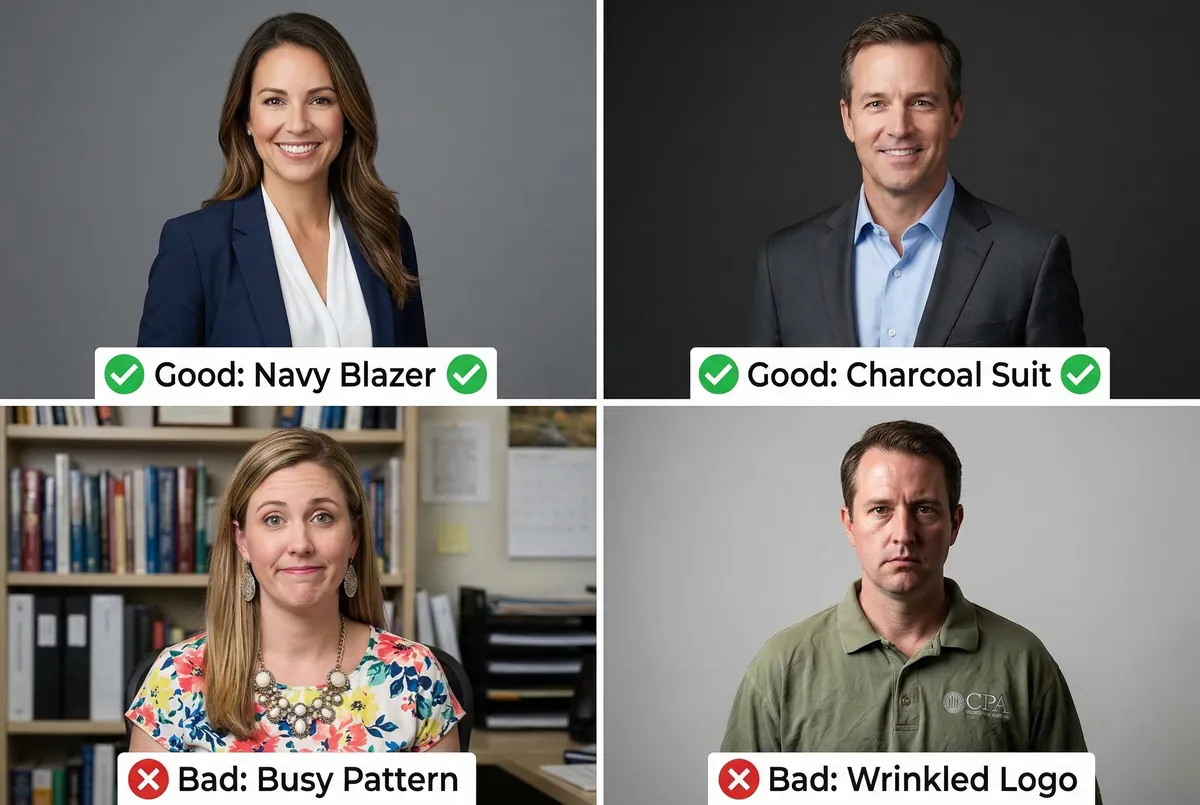
- Solid colors in navy, burgundy, emerald, or charcoal photograph better than patterns on camera
- Clothing fit matters more than brand or price: tailored and wrinkle-free beats expensive and ill-fitting
- Match your outfit to your industry: suits for corporate, smart casual for tech, bold colors for creative
- Bring 2 to 3 outfit options to any headshot session
- If wardrobe planning feels overwhelming, ManyPics handles the styling for you
Don't want to worry about what to wear? ManyPics lets you try dozens of professional outfits without changing clothes. Upload one photo and get polished results in under a minute. Try it free
Prefer to plan your own outfit? Keep reading.
In This Guide
- Why Your Headshot Outfit Matters
- 5 Outfit Rules for Every Headshot
- Best Colors to Wear
- What to Wear by Industry
- Outfit Tips for Women
- Outfit Tips for Men
- Common Outfit Mistakes
- Pre-Session Checklist
- AI Headshots
- FAQ
Why Your Headshot Outfit Matters
Your headshot outfit is not decoration. It is a communication tool. Knowing what to wear for a professional headshot matters because a LinkedIn profile photo, a company team page, or a conference speaker bio may be the only visual impression someone has of you before deciding to reach out, hire, or do business with you.
Professional headshots crop tight, usually from the chest up. In that frame, every detail is amplified: a wrinkle across the chest, a distracting pattern, a collar that sits wrong. What reads as "fine" in a full-length mirror can look careless in a head-and-shoulders crop. Your clothing needs to work specifically for that framing.
The good news: getting your headshot attire right is not complicated. A few universal rules cover 90% of situations, and the rest comes down to matching your wardrobe to your industry.
5 Outfit Rules for Every Professional Headshot
These five rules cover what to wear for a professional headshot regardless of your field, your gender, or whether you are shooting with a photographer or at home with your phone.
1. Stick with Solid Colors
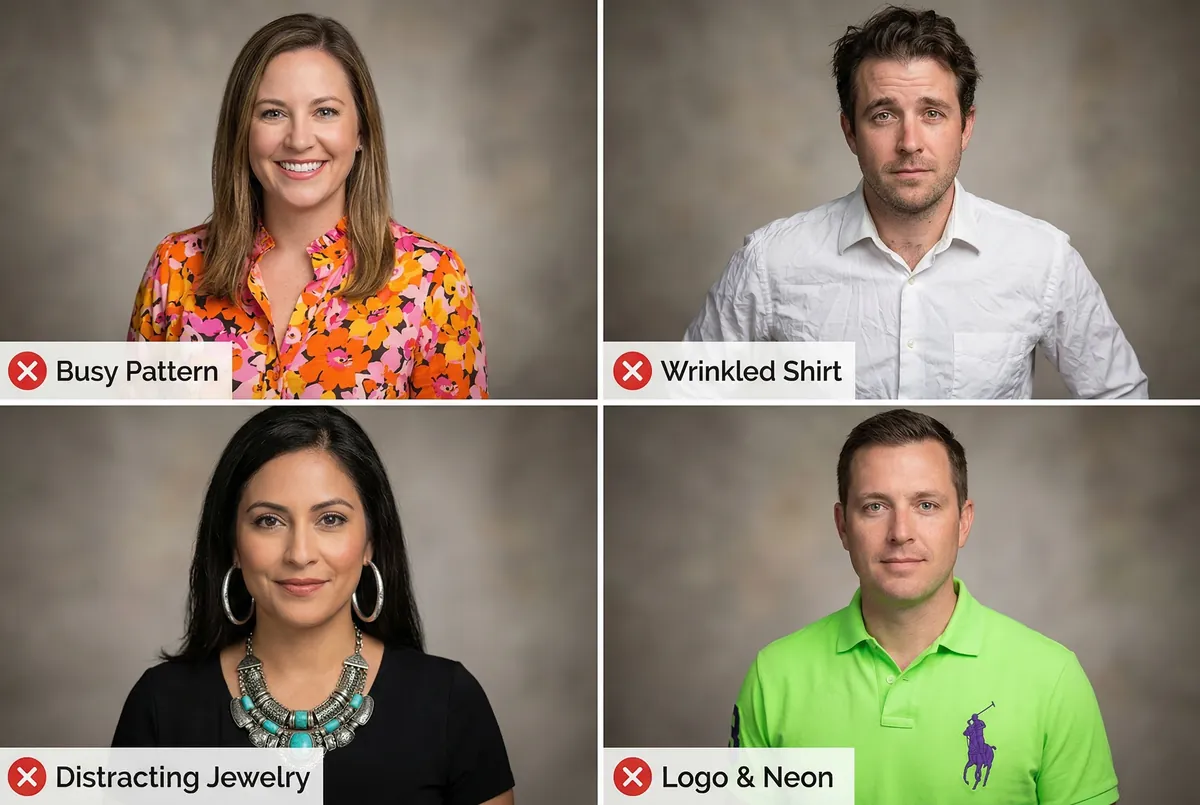
Solid colors let your face be the focal point. Busy patterns, stripes, plaids, and small prints create a moire effect on camera: wavy visual distortion that makes your clothing look like it is vibrating. Even patterns that look fine to the naked eye can cause problems in digital photos displayed on screens.
This does not mean every piece needs to be a flat block of color. Subtle textures like a woven blazer or a lightly ribbed knit add visual interest without causing moire. The rule is: if you can see a repeating pattern from 3 feet away, skip it for your headshot session.
2. Get the Right Fit
Fit is the single biggest factor in whether a professional headshot outfit looks polished or sloppy. Clothing that is too tight pulls at the seams and creates visible tension across your shoulders and chest. Clothing that is too loose adds bulk and looks unkempt when cropped close.
The goal is tailored: skimming your body without clinging. If you are between sizes, size up slightly and have the piece altered. A $50 blazer that fits perfectly photographs better than a $500 one that does not.
3. Choose Your Neckline Wisely
Your neckline frames your face. It is the second thing the viewer sees after your expression, because professional headshots crop just below the collarbone.
- V-necks elongate the neck and create a flattering frame
- Crew necks work well for casual-professional shots
- Boat necks add a polished, classic look
- Turtlenecks can make you appear to have no neck in tight crops. Avoid unless the fabric is thin and fitted
- Very low necklines pull attention downward and away from your face
4. Avoid Logos, Patterns, and Shiny Fabrics
Logos (unless it is your own company branding) read as casual at best and distracting at worst. Shiny or metallic fabrics reflect studio or natural light unpredictably, creating hot spots in the image. Sequins, satin, and some polyester blends are common offenders.
Matte fabrics like cotton, wool, linen, and quality knits absorb light evenly and produce a clean, consistent image.
5. Prep the Night Before
The best professional headshot outfit loses its impact if it is wrinkled, stained, or covered in lint. The night before your shoot:
- Iron or steam every piece you plan to wear
- Run a lint roller over everything, especially dark fabrics
- Check for loose threads, missing buttons, or stains you missed
- Try the complete outfit on to confirm fit. Clothes shrink, bodies change, and surprises on shoot day cost time
Best Colors to Wear for a Professional Headshot
Color matters in headshot photography. The right color adds depth, complements your skin tone, and creates contrast with your background. The wrong color washes you out, blows out the exposure, or fights for attention with your face.
Colors That Photograph Well
These colors work across most skin tones and professional settings:
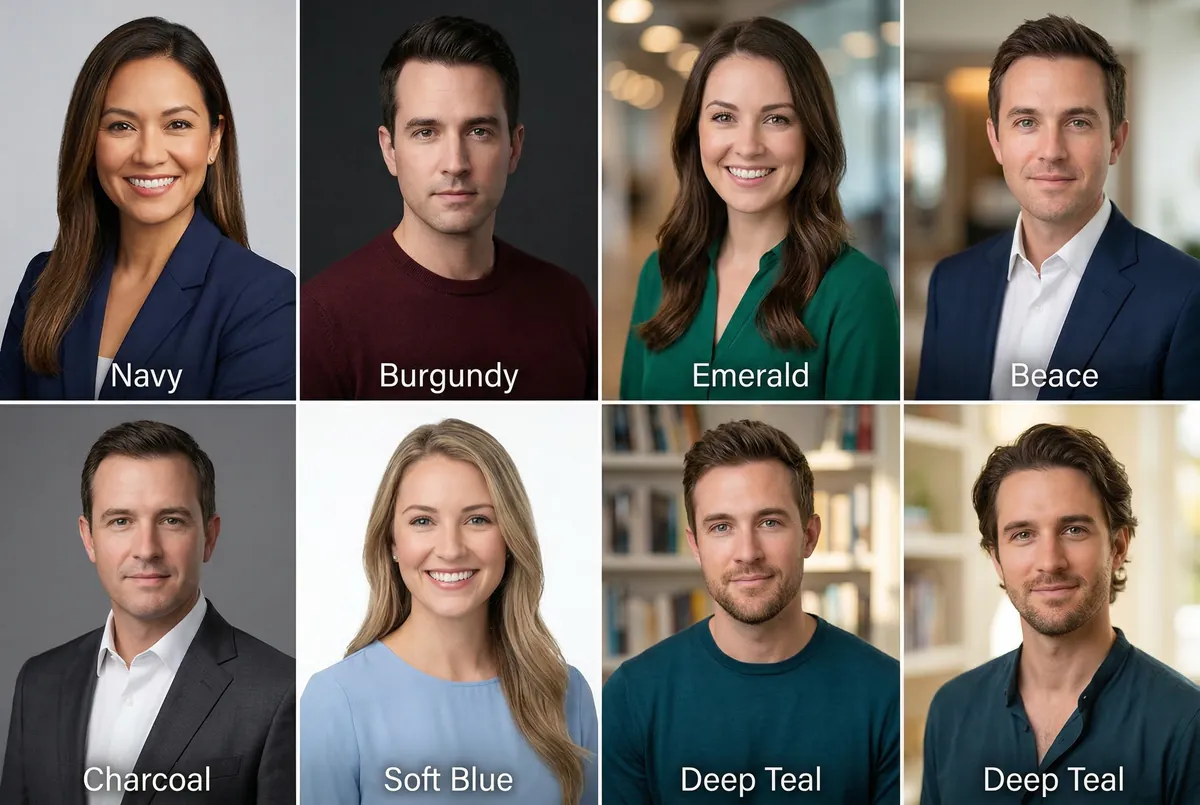
- Navy reads as professional without the harshness of black
- Burgundy adds warmth and personality while remaining formal
- Emerald green stands out without being loud
- Charcoal is the smarter alternative to pure black
- Soft blue is universally flattering and reads as approachable
- Deep teal works well for creative professionals
As a general rule, mid-tone to jewel-tone colors photograph best. They have enough depth to create contrast without overpowering your face.
Colors to Avoid
- Pure white can blow out in photos, especially with flash or studio lighting. It creates harsh contrast against your skin and can make your face appear darker. Off-white, cream, or light gray are safer alternatives
- Pure black absorbs light and loses texture and detail. In tight crops, a black shirt against a dark background turns you into a floating head. Charcoal and navy are better options
- Neon and very bright colors pull the viewer's eye to your clothing instead of your face
- Pastels can wash out lighter skin tones and appear faded on camera
How to Match Colors to Your Background
Your outfit, your skin tone, and your background should create a triangle of contrast. If your background is dark (charcoal, navy), wear a lighter or mid-tone top. If your background is white or light gray, mid-tone to dark clothing creates separation.
The worst combination: a dark outfit against a dark background, or a light outfit against a light background. Without contrast, you lose your silhouette and the image looks flat. If you are not sure what background you will use, read our guide on choosing a professional headshot background to match your outfit and industry.
What to Wear by Industry
What to wear for a professional headshot depends heavily on your industry. What reads as professional in finance would look overdressed in a startup, and what works in a creative agency might look too casual for a law firm. For more visual reference, browse our gallery of professional headshot examples.
Corporate and Finance
The expectation here is polished and conservative. A well-fitted suit in navy, charcoal, or dark gray is the standard. For a slightly less formal option, a blazer over a crisp dress shirt works well. Ties should be solid or subtly patterned. Colors should be muted and traditional: navy, charcoal, white, light blue.
The key word is restraint. No bold colors, no visible patterns, no statement pieces. The outfit signals stability and trustworthiness.
Tech and Startups
Tech culture leans smart casual. A clean oxford shirt, henley, or quality crew-neck sweater in a solid color is the sweet spot. Blazers are optional; when worn, unstructured and relaxed silhouettes fit better than rigid suiting. Navy, gray, olive, and soft blue are reliable choices.
The goal: you look professional enough to pitch investors but relaxed enough to write code all afternoon.
Creative and Marketing
Creative professionals have more room to express personality through their headshot outfit. Bold colors like emerald, burgundy, mustard, and deep teal work well. A blazer in an unexpected color, an interesting collar, or a layered outfit can differentiate you. Textures like linen or tweed add visual interest.
The balance: distinctive but intentional. Your outfit should feel like a deliberate choice, not an accident.
Healthcare and Education
Approachability and warmth matter here. A blazer over a blouse or collared shirt is the most common choice. Soft, trustworthy colors (navy, soft blue, burgundy, gray) work well. Scrubs or a lab coat are appropriate if that is what your patients or students see you in daily.
Avoid anything too formal (it can feel intimidating) or too casual (it can undermine credibility).
| Industry | Outfit | Colors | Vibe |
|---|---|---|---|
| Corporate / Finance | Suit or blazer + dress shirt | Navy, charcoal, white | Polished, conservative |
| Tech / Startups | Oxford, henley, or clean sweater | Navy, gray, olive | Smart casual, authentic |
| Creative / Marketing | Bold blazer, layered, textured | Emerald, burgundy, teal | Distinctive, intentional |
| Healthcare / Education | Blazer + blouse or collared shirt | Soft blue, navy, gray | Warm, approachable |

Headshot Outfit Tips for Women
The general rules above cover the foundation. Here are a few specifics for what to wear for a professional headshot as a woman.
Blazers are your best friend. A well-fitted blazer instantly elevates any outfit. It works across every industry, frames the shoulders cleanly, and photographs reliably. Navy, charcoal, and black are safe; emerald, burgundy, or cream add personality.
Keep jewelry minimal. Small stud earrings, a simple pendant necklace, and a watch are plenty. Chunky bracelets catch light. Large earrings compete with your face. Anything that jingles or reflects is a distraction on camera.
Watch the neckline. A V-neck, boat neck, or modest scoop neck frames the face well. Avoid very low-cut tops: professional headshots crop tight, so what looks fine in a full-length mirror may appear as too much skin in a head-and-shoulders crop.
Hair off the face. Your face is the subject. If your hair covers part of your face, the headshot loses impact. Style it in a way that keeps your forehead and jawline visible.
Bring a backup. A silk scarf, a second blazer, or a different blouse can transform the same base outfit. Small changes create variety without a full wardrobe swap.

Headshot Outfit Tips for Men
Here is what to wear for headshots if you are a man, beyond the universal rules above.
Start with the shirt. A well-fitted dress shirt in white, light blue, or soft gray is the most versatile starting point. Make sure the collar is stiff, not floppy. A limp collar drags the entire image down.
Skip the undershirt if it shows above your collar. A visible crew-neck or V-neck undershirt reads as casual. If you need an undershirt, choose a deep V-neck that stays hidden.
Ties are optional. For corporate and finance, a solid or subtly patterned tie adds formality. For every other industry, an open collar looks cleaner and more modern. If you do wear a tie, match its width to your lapels.
Blazer or suit jacket fit. The shoulders of the jacket should align with your actual shoulders. If they extend past, the jacket is too big. If they pinch, it is too small. The collar should sit flat against the back of your neck with no bunching.
Grooming. Trim or style facial hair the day before, not the day of (to avoid irritation). Get a haircut 1 to 2 weeks before the session so it settles naturally. Clean, trimmed nails matter more than you think in wider-framed shots.

Common Headshot Outfit Mistakes
Even after choosing what to wear for a professional headshot carefully, small mistakes can undermine the result. These are the wardrobe errors that show up over and over, and each one is avoidable with a few minutes of planning.
Wearing something brand new. New clothes you have never worn often feel stiff and unfamiliar. That discomfort shows in your posture and expression. Wear something you know fits well and feels comfortable.
Chasing trends. An oversized blazer, a specific collar cut, or a seasonal color that screams "last year" will date your headshot fast. Stick to classic silhouettes and timeless colors. Your headshot should look current for 3 to 5 years.
Ignoring wrinkles. Creases that are invisible in person become obvious under headshot lighting. Even a single crease across the chest draws the eye away from your face. Iron or steam everything the night before.
Wearing distracting accessories. Statement necklaces, novelty ties, bright scarves, and chunky watches all compete with your face for attention. In a professional headshot, your face should win every time.
Matching your outfit to the background. A navy shirt against a navy backdrop makes you disappear. Always create contrast between your clothing and the background. If you do not know your background color in advance, bring multiple options.
Forgetting about the crop. Professional headshots crop at the chest or just below the collarbone. A belt, an interesting hem, or a nice tuck: none of it matters if it falls outside the frame. Focus all your outfit selection effort on the neckline and shoulders.
Pre-Session Checklist
Now that you know what to wear for a professional headshot, run through this checklist before your session, whether it is with a photographer, at home with your phone, or with an AI generator. Pairing the right outfit with the right professional headshot poses makes every shot count.
- 2 to 3 outfits packed and ready (one formal, one smart casual, one personal)
- All pieces ironed or steamed with no visible wrinkles
- Lint-rolled especially dark fabrics
- Fit confirmed by trying everything on the night before
- No tags, loose threads, or stains
- Jewelry kept minimal and non-reflective
- Neckline tested in a mirror with a phone-camera crop (simulate the headshot frame)
- Colors checked against your expected background
- Backup accessories packed (scarf, different blazer, second shirt) for variety
Skip the Wardrobe Stress with AI Headshots
If figuring out what to wear for a professional headshot feels like more effort than the headshot itself, there is another path. ManyPics lets you skip the wardrobe decisions entirely.
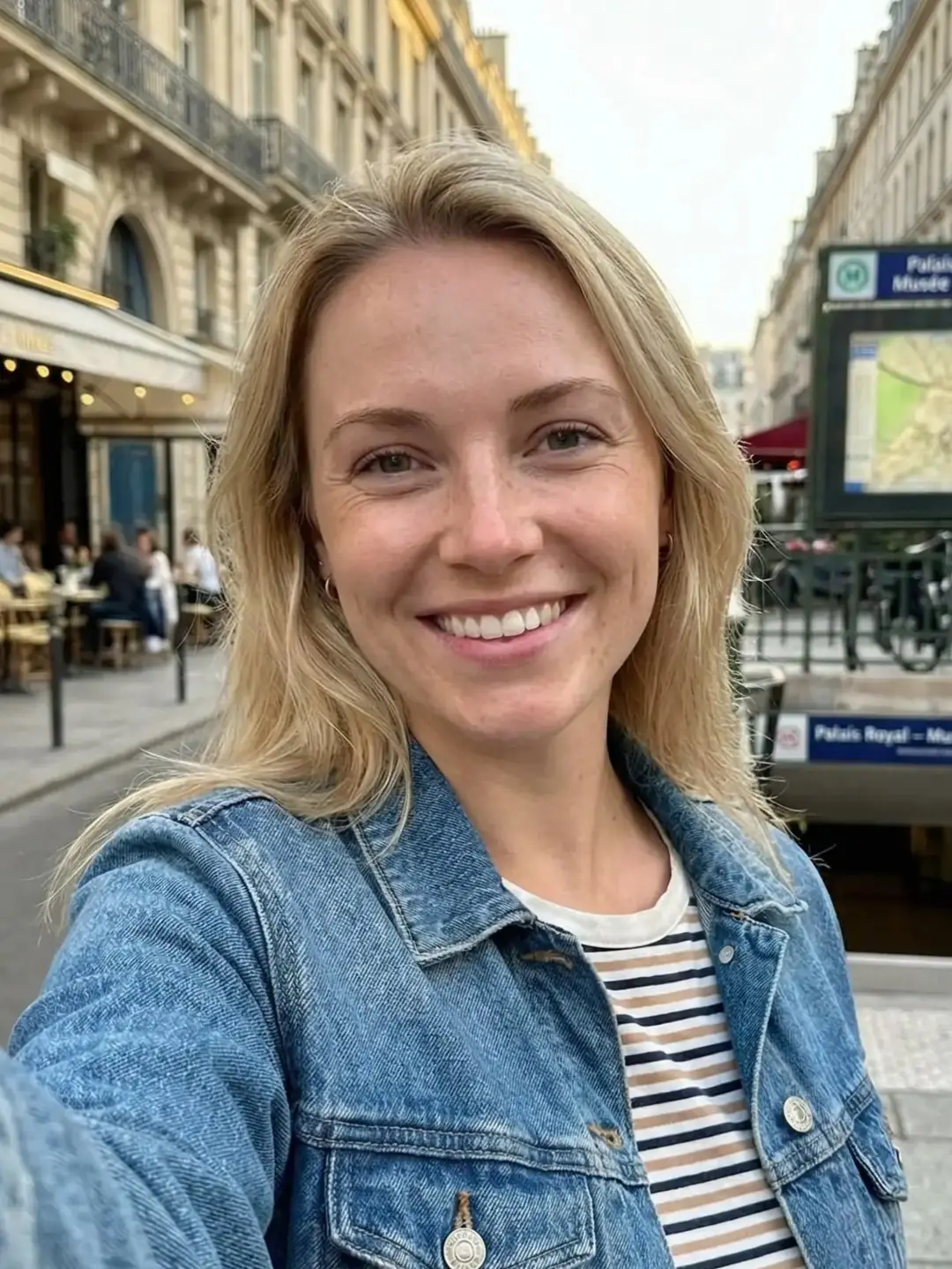
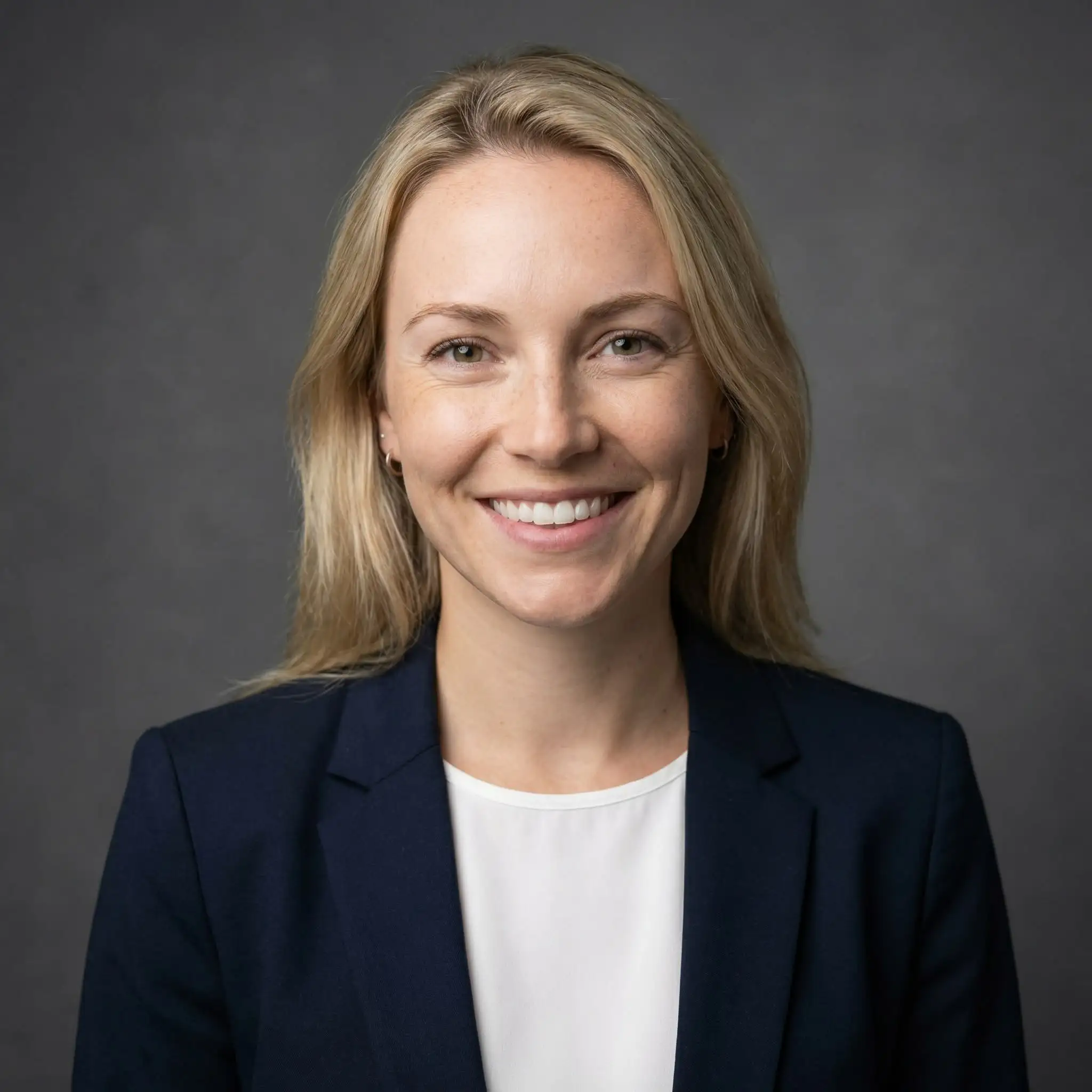
Upload one selfie to the free ai headshot generator, and ManyPics produces professional headshots in multiple styles, outfits, and backgrounds. The styling is handled for you: no ironing, no lint-rolling, no color-matching. You get polished results in under 1 minute, starting at $9.
It is especially useful when you need headshots for multiple contexts (LinkedIn, company site, speaker bio) and want each one to match the setting. Instead of packing three outfits and booking a session, you upload once and choose from dozens of professional looks.
Frequently Asked Questions
What is the best color to wear for a professional headshot?
Navy, burgundy, emerald, charcoal, and soft blue photograph well across most skin tones and backgrounds. They add depth to the image without washing you out. Avoid pure white (overexposure risk), pure black (absorbs light and loses detail), and neon colors (distract from your face).
What should a woman wear for a professional headshot?
A fitted blazer over a simple blouse or top in a solid color works for most industries. Choose a V-neck or boat neck to frame the face. Keep jewelry minimal: small earrings, a simple necklace, and no chunky bracelets. Match formality to your field.
What should a man wear for a professional headshot?
A well-fitted dress shirt in a solid color is the safest starting point. Add a blazer for corporate or finance roles. Skip the undershirt if it shows above the collar. Make sure the collar is stiff, not floppy. A solid or subtly patterned tie is optional.
Should I wear a suit for a professional headshot?
Only if your industry expects it. Corporate, finance, and legal professionals benefit from a suit. Tech, creative, and startup professionals look more authentic in smart casual. The goal is to match how your clients or colleagues expect to see you.
Can I wear black for a professional headshot?
Pure black absorbs light and can lose detail in photos, making you look flat. Charcoal or dark navy are safer alternatives that still read as formal. If you do wear black, pair it with a lighter top for contrast.
How many outfits should I bring to a headshot session?
Bring 2 to 3 complete outfits so you can switch if one doesn't photograph well. Include one formal option, one smart casual, and one that represents your personal style. Try everything on before the session to check fit and condition.
What to wear for a professional headshot is ultimately about looking professional and approachable without drawing attention away from your face. Solid colors, tailored fit, and wrinkle-free fabrics handle the foundation. Match your wardrobe to your industry, stick to classic pieces that will age well, and run through the checklist the night before. When the outfit is right, it disappears and your face does the talking.
Need a professional headshot without the wardrobe planning? Try ManyPics' free ai headshot generator for polished results in under 1 minute.




Get your AI headshot